Zoek in ons archief op
naam, trefwoord of datum:
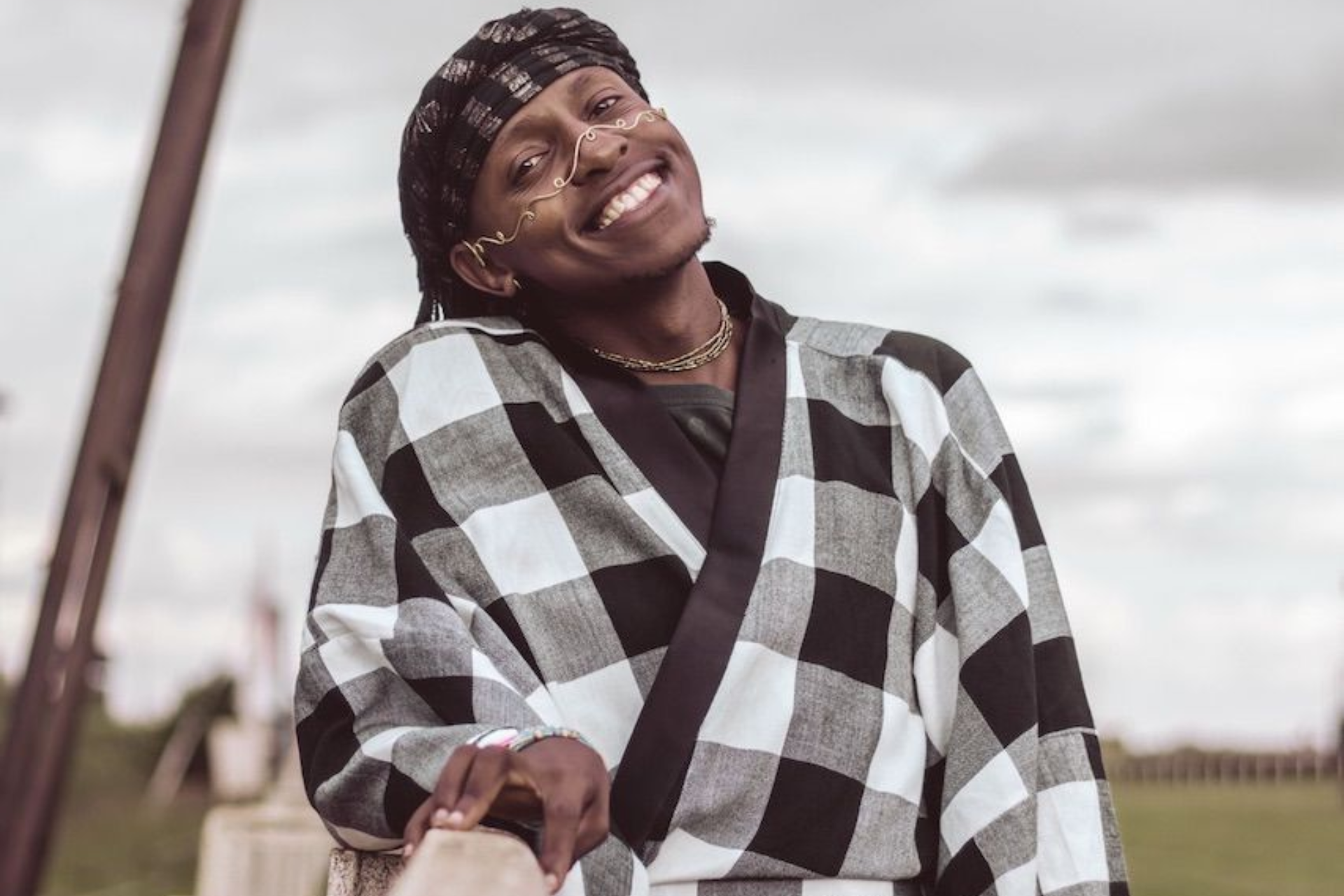
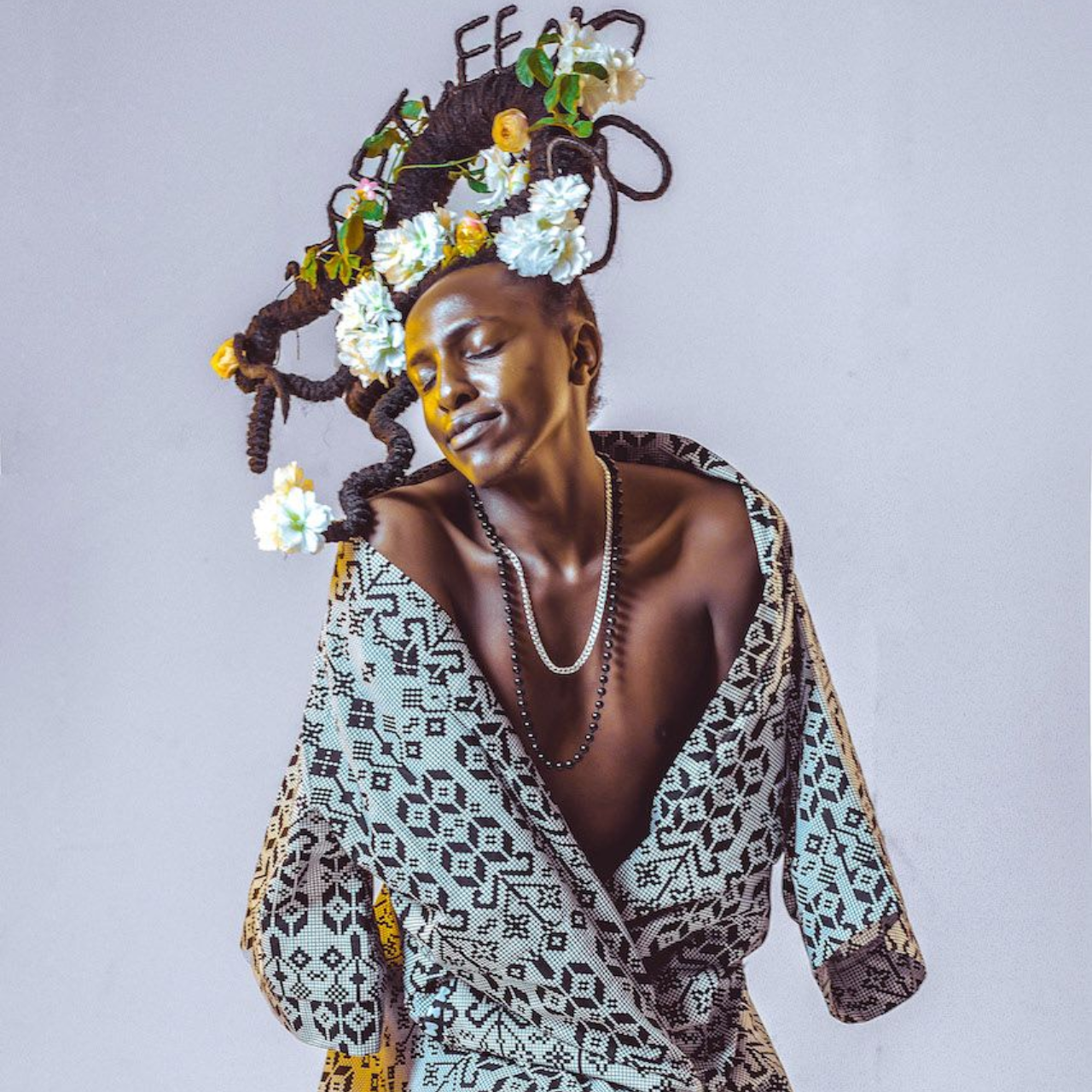
Kuiyu Kang'ari: “We are born to take up space and express ourselves.”
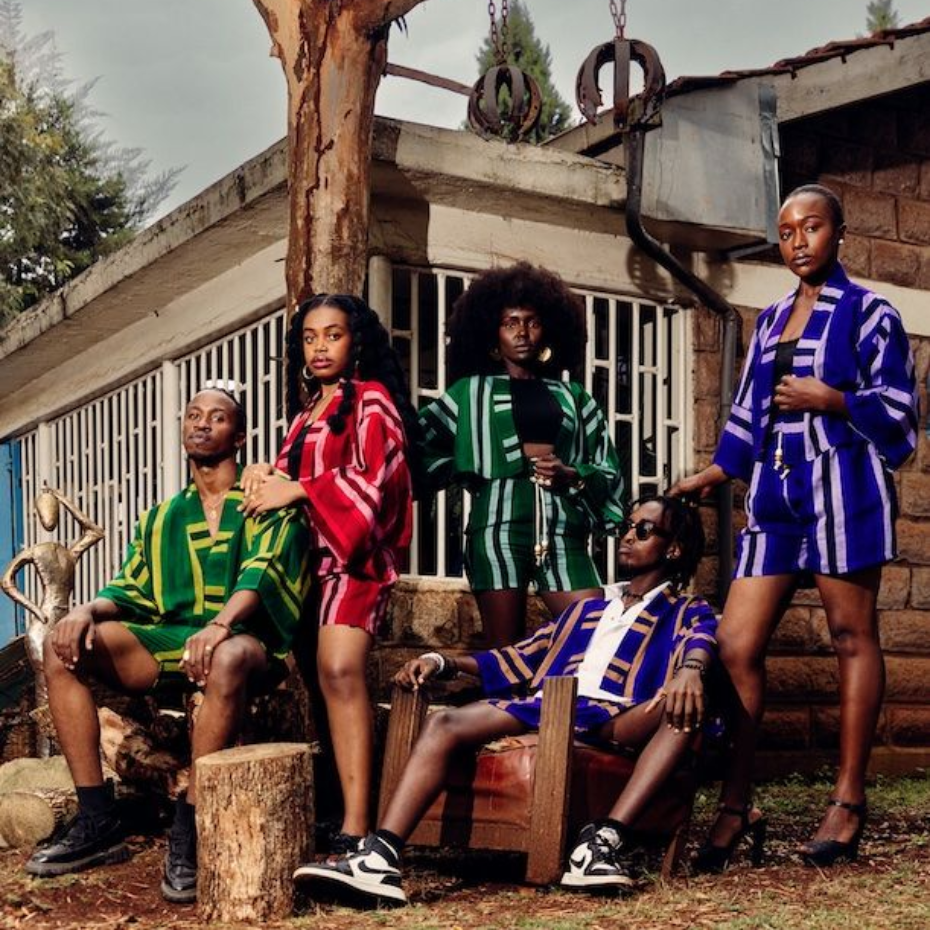
Meet Kuiyu Kang'ari, also known as “Sayaree” a multidisciplinary artist, designer and protagonist. Their creative practice mainly revolves around fashion and music, and is rooted in queer liberation, decolonial thinking, and East African heritage. They founded the fashion brand Liquid Lemn as a tool for identity positivity and non-binary aesthetic lifestyle. In this conversation, we trace how Kuiyu’s journey of self-discovery led them to develop their creative voice.
Door Anna Swagerman
Can you describe the environment in which you grew up?
‘I grew up in a small village in south-central Kenya, close to Nairobi, which was a privilege. We were among the first to settle in the area, so it was still very green and largely untouched. I never longed to live in the city; I’ve always been drawn to the serenity of the countryside and its strong sense of community. When I moved to the Netherlands, life felt more individualistic and it took me a while to feel connected. But over time, I did grow a special bond with the city and the faces of Rotterdam for example.’
As someone who identifies as queer, did you feel accepted back home?
‘I’ve always stood out, even when I tried not to. That wasn’t always easy. People often projected their limited beliefs of what a man or woman should be onto me, even before I had developed my own sense of identity. These experiences rewired my values and challenged my confidence to take up space. Although most of my life differs from the majority in my community, there are spaces and times where I felt accepted, though scarce. Still, I reached a point where I needed to venture out and experience spaces that could accommodate my expressions unequivocally. I came to the Netherlands because I needed a new environment to continue discovering myself. As an adventurer I’ve never been someone who settles in one place, and stepping away from my family, status and norms for a while gives room for new perspectives.’
“By showing my authenticity, I hope to encourage others to do the same.”
What helped you to venture out and take this leap?
‘I’ve always been quite committed to following my intuition. Radically choosing myself over and over again, for my own happiness, but also to be a more honest companion to others. By showing my vulnerability, I hope to encourage others to do the same. For me, relationships are a continuous process of revelation. Some people are happy to meet me as I am, while others try to break down what they see, because of their own projections.’
Music became one of your creative outlets. How did these personal challenges find their way into your work?
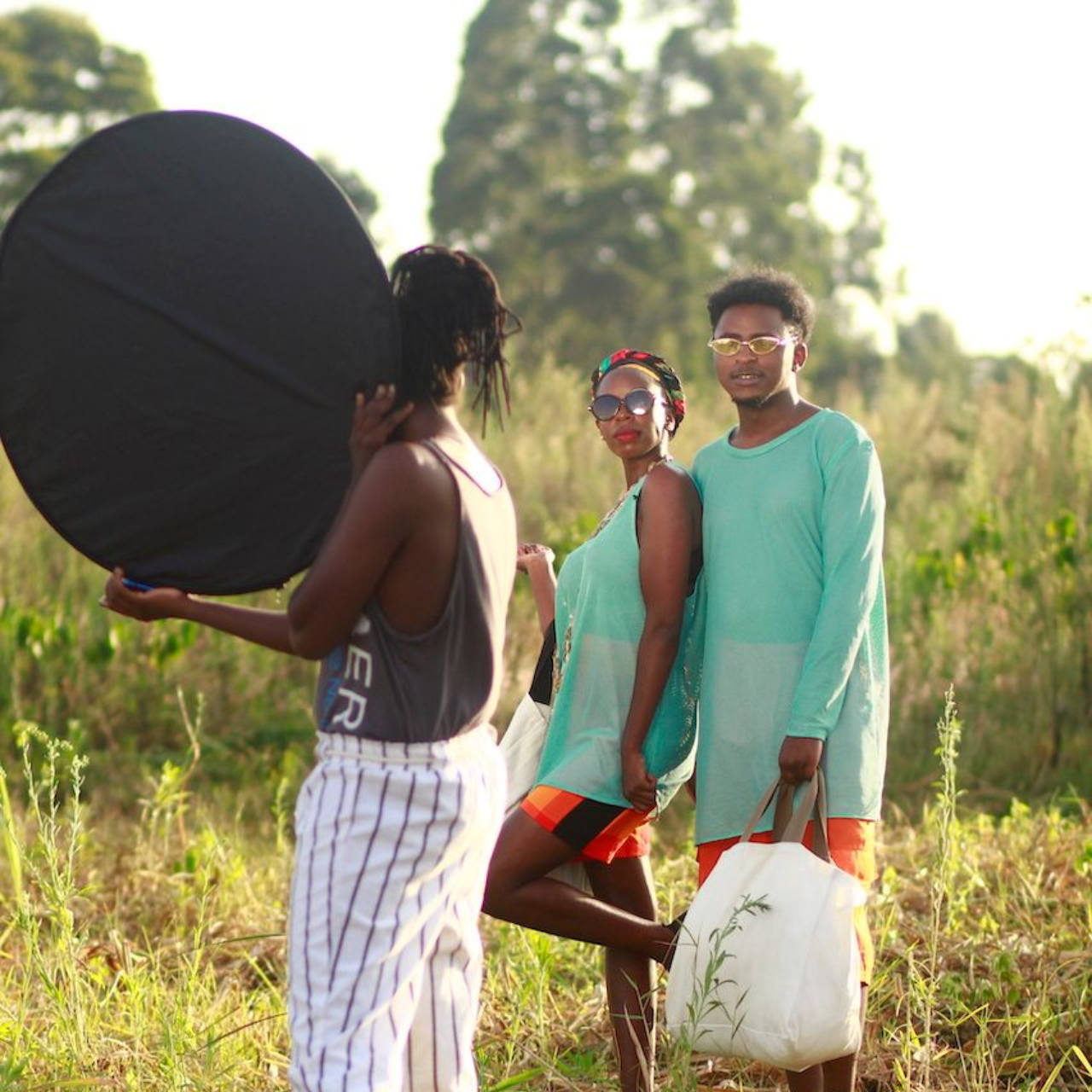
‘For example, my music project In Between grew out of opting out of binary categories. Yet I’m here, fully real, so there must be others like me. I started finding people who felt similar or who were also questioning at the time. Creatively I found resonance in the Wodaabe tribe, where men adorn their faces and dress to showcase their beauty in a contest to attract a female partner. That reversal of norms really stayed with me. Through the music I write, and the imagery in the videos, I hope to create a space where people can question their assumptions, because beauty, style and identity have little to do with gender or sexual orientation.’
Authenticity is central in your work. What helped you to find your voice?
‘Solo travelling is a powerful way to discover yourself, as is any practice that pulls you out of your day-to-day environment and sets you in a different vibration. We are born to take up space and express the experiences that our bodies have witnessed, survived or triumphed. When you walk, for example, you access different information than when you are sitting still. I also deeply believe in the power of silence. It’s easier to hear the voices we at times mute when we’re not surrounded by noise and chaos. At this time when I make music, I imagine I’m organizing sound back into serenity.’
“We’re meeting people in search of affirmation of their identity”
Another creative expression for you is fashion, can you describe the identity of your brand?
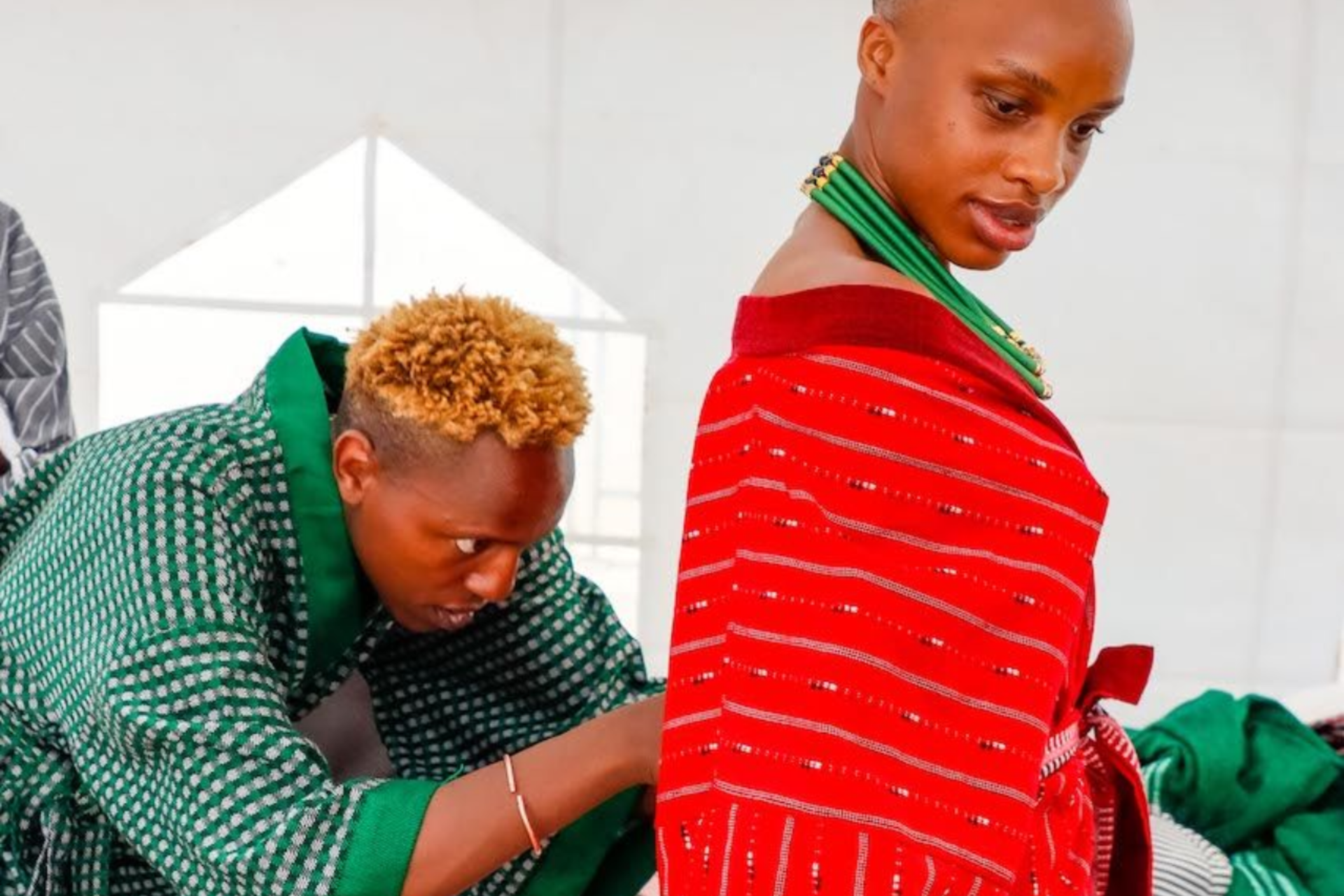
‘Fashion is, at its core, a man-made invention, so with our brand Liquid Lemn, we allow ourselves the freedom to rewrite the rules. We don’t follow seasons, we don’t subscribe to fast production, and our clothes are unisex. We see fashion as an art form and a medium for dialogue and empowerment. My earliest collections didn’t come only from a love of beauty, but from inner changes I was going through and a need to find my own expression through clothing. Wearing something that reflects how I feel has a deep impact on me, and I want to offer that same experience to others. With our team, we’re not just making clothes; we’re meeting people in search of affirmation of their identity and a sense of hope.’
Do you have an example of such an encounter?
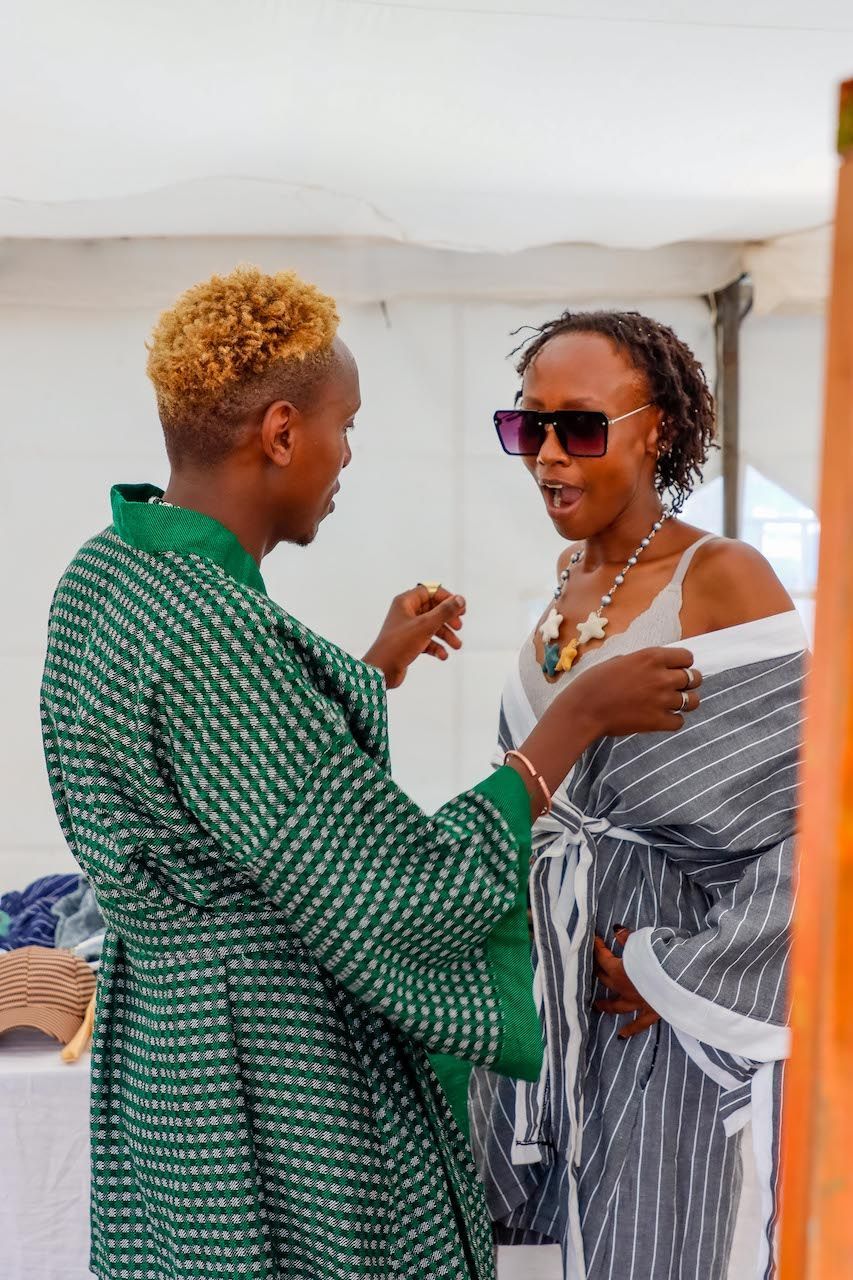
‘When ‘queer’ people find our clothes at market stalls in Kenya, they’re often struck by the fact that we’ve built a safe space supporting queer and women artisans, working exclusively with local resources. It shows that we can address our own challenges from within the country and create new realities. It’s very rewarding when customers understand our core DNA. There’s a sense of recognition, and we realize we’re part of a bigger movement. That’s why it’s important for me to keep the production in Kenya, even though we also present the brand in other countries.’
How is your experience of running a queer business back home?
In Kenya, it’s still a developing topic. Some days, interactions with people are very promising, while other days are more challenging. In the neighborhood where we work, it’s possible to co-exist, but we don’t have a sign on the door of our studio, for example. In the Netherlands, it’s easier to navigate my identity without queerness needing to be at the center of it. Moving between these two worlds has therefore been very valuable, both for me personally and for my work.
How would you describe the most important quality of your brand?
‘We offer a space for customers who are longing to talk about their identity or heritage. I meet many people at our booth who feel encouraged to try something different. We offer a safe space for them to rediscover parts of themselves they may have overlooked. Within our team, I try to offer the same sense of safety, because I missed that when I first entered the job market. My queerness often felt like an unspoken presence in the room, and sometimes I felt like I was walking on eggshells. “How do they see me? Am I being too much? Can I be myself here?” This has been very challenging, and I know there are still many people navigating those same fears every single day.’
How have these challenges shaped your creative path?
‘I see every piece we create as an opportunity to express and share our values. We come from a post-colonial context and we are queer, so we are constantly met with projections and interpretations of who we are. With Liquid Lemn, we created the freedom to choose how we want to express ourselves. We don’t make these clothes primarily to drive sales, but to communicate a different message.’
“Fashion is a tool to celebrate our existence”
How would you describe this message?
‘It’s a message of hope and resilience. We don’t only share our struggles; fashion is also a tool to celebrate our existence. There’s a real joy in looking in the mirror and feeling at home in yourself. Are you only able to fully be yourself with certain people, or do you dare to stay consistent in every encounter? When you dim yourself to fit in, it also limits your creative potential.’
What do your creative challenges look like at this stage of your journey?
‘Fashion and music are very rewarding passions for me, but I’m also learning to slow down and allow life to reveal itself, instead of always trying to be at the forefront. Especially in this fast-paced world, it’s important to remember that success is relative. What matters is being able to enjoy life as it unfolds.’
What would you say to young entrepreneurs wanting to pursue a creative path?
Sacrifice is key. Often there is a silent cost you pay with your choices. I have not always been able to make a living from my artistic projects. It required a lot of personal investment and persistence. Building a community and finding people who truly believe in what you do can take a longer time than desired.
If people want to get a taste of your fashion and music, where can we find you?
‘We’ll be doing pop-up markets in several European cities, and the dates will be shared on our instagram, Liquid Lemn. And anyone who wants to visit our team in Nairobi is always very welcome.’ My music is available via bandcamp.com and leading streaming services.